Monday Morning Wake-Up Call: Take 2

So Stewart (Brand) gave birth to this idea that if we could show the world from the outside, if we realized what an amazing, extraordinary, unique gift that was — this tiny, little planet teeming with life, swimming around in a dead universe, as far as we know.

We still don’t know that there’s any other life in the universe, which is phenomenal, if you think about it. We still don’t know. We might be the only life in the universe. I think about that nearly every day. I think it’s the most sobering thought. I think that should be shouted from the rooftops every day.

That’s my version of seeing the whole Earth from space — getting people to understand that we might be the only life. It might all be on this one place, and bloody hell, shouldn’t we look after it a bit better, then?

Then those things make me constantly think and constantly be grateful for the fact that I’m alive. I remember reading this comment from a New York taxi driver. He’s driving, and he turns to the customer and says, “Oh, life. I’m so glad I got in.” [Laughs.]

I just love the idea that it’s like an amazing show at a theater and you managed to get a ticket to see it. I appreciate that kind of gratitude.

Brian Eno interviewed by Ezra Klein, from “A Breath of Fresh Air with Brian Eno” (NY Times, October 3, 2025. The Ezra Klein Show)


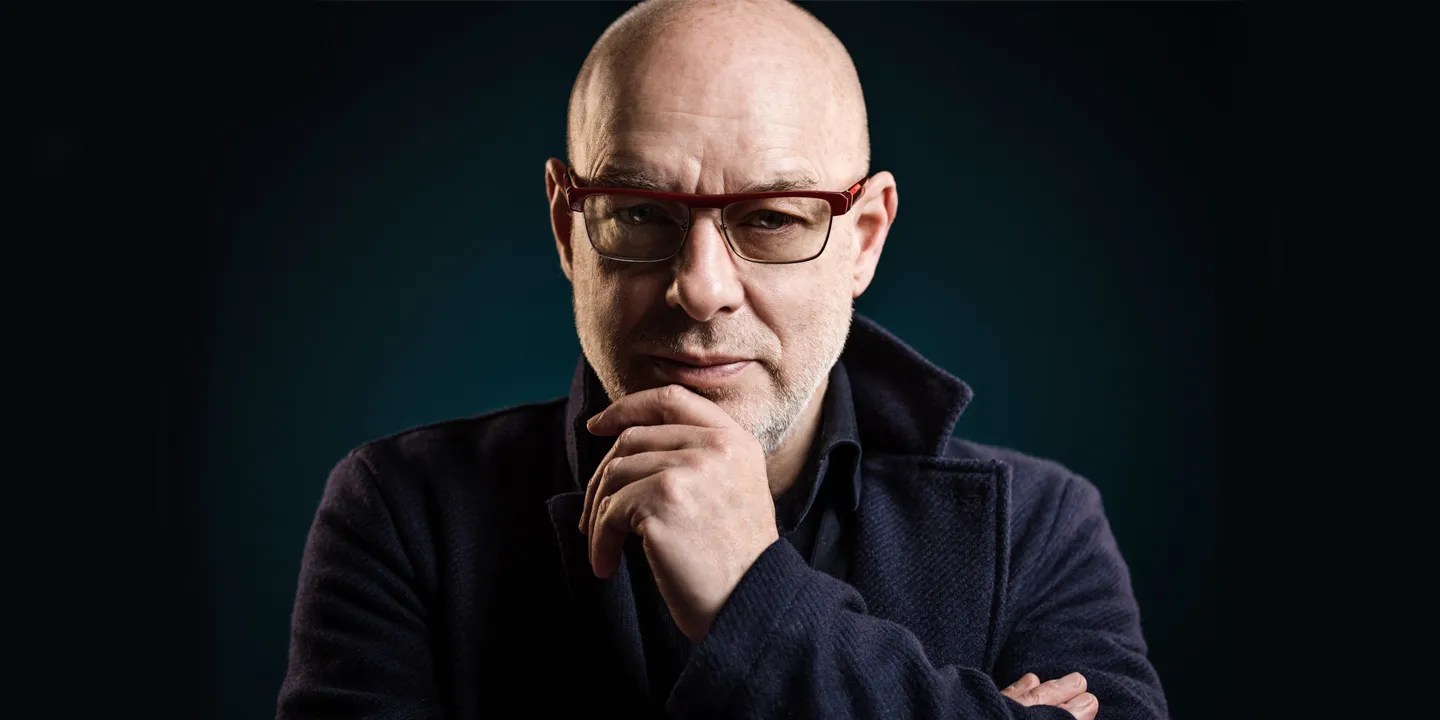
Brian Eno Portrait by Shamil Tanna @ Pitchfork.com

Lightly Child, Lightly.

Q: You’d been disillusioned with acting for the better part of 15 years. What was the depression about?

SP: or a long time I gauged the value that a film would have on a good script, a good cast, a good director and a subject that I would want to go see a movie about. Those things were enough for a while. You get older, and you get more aware of the sacrifices. It’s about time, which we don’t get more of. It’s not enough to work with people you respect and like. You want the same thing you find in family. You want to be with people you love, and it wasn’t since Gus Van Sant’s movie “Milk” that I’d had that feeling. So I kept taking these jobs that I thought were good jobs about good subjects with good directors and I was missing my family, my dog, and I said, What the [expletive] am I doing here? I felt like, maybe I’m done with all this. […]

Q: We talked about how in the recent past you struggled with motivation about acting, and also how you can feel a lot of anger at the world. So what gets you up in the morning these days?

SP: I’m not averse to feeling extremely frustrated with the world. “The world”: We know what we’re saying, I think; I don’t want to be grandiose, or I don’t know how not to be. But I don’t even know if I would call what Russia and Putin are up to right now something that I engage in a lot of rage about. I don’t need rage to get me to a clarity of knowing how evil and obscene it is. The frustration is with those who are not willing to be sober enough to recognize our sacred duty to support the defense of Ukraine. But I don’t even call that anger so much. [Penn points to one eye] I wake up every day with this eye clear about the threat to the environment, the anguish people are going through, attempts to figure out how I can be of any value-added. [Penn points to his other eye] And this one is driving me from the time I wake up, and all I see is that this is still a magic trick of a beautiful cosmos and I am gonna [expletive] enjoy it every day — and I do. Sorry to those who would have me do otherwise, but I am feeling great.

Sean Penn, from Interview by David Marchese: Sean Penn Let Himself Get Away With Things for 15 Years. Not Anymore.” (NY Times, Sept 27, 2025)


Notes:

  • Post Title & Inspiration: Aldous Huxley: “It’s dark because you are trying too hard. Lightly child, lightly. Learn to do everything lightly. Yes, feel lightly even though you’re feeling deeply. Just lightly let things happen and lightly cope with them.

Monday Morning Wake-Up Call

At the Marlboro Music School and Festival this summer, my fellow musicians and I spent an evening listening to historical recordings, an annual tradition. We ended with the slow movement of Beethoven’s String Quartet (Op. 127), performed by the Busch Quartet, refugees from Hitler’s Germany.

This music is as profound as can be. From the first notes, I was in tears. Time was suspended, and nothing else existed. When it ended, I quietly left the room. Making polite conversation would have brought me back to earth; I wasn’t ready.

What I had experienced was complete immersion into music.

Most of life’s great moments are like this. We give our full attention to one thing, and marvel at its beauty and strangeness and specificity. Past disappointments and future worries evanesce, allowing us to take in the present in its totality.

But in today’s frenetic world, such moments are increasingly hard to come by. We should consider how rare and treasurable this kind of immersion is. […]

All sorts of people more qualified than I — sociologists, political scientists and media critics — have addressed the pernicious effects of social media and algorithmic marketing on our society and psyches. But I can testify that music is uniquely well positioned to provide an antidote to this avalanche of stimulus.

You may prefer literature or painting as art forms, but they do not have music’s magnificent, peculiar abstraction. Novels use words; even an abstract expressionist painter relies on colors and shapes that exist in nature and our lives. But instrumental music is not “about” anything. It stirs the emotions despite — or maybe because of — its inability to reference our lived experience in any literal way. A great performance of a great piece of music simultaneously takes us out of our heads and puts us in touch with our deepest, most inaccessible selves. That is the magic of music. […]

As I listened to this astonishing music in the Marlboro dining hall, I never opened my eyes. This was an instinct. I sensed an opportunity to be connected to something profound and beautiful and in no way ordinary, and I did not want to let my other senses intrude on the experience. In our splintered, combustible world, this immersion is the path of most resistance, and a gift beyond words.

Jonathan Bliss, from “Too Many Dings and Beeps? Try Beethoven” (NY Times, Sept 28, 2025)

Mr. Biss is a concert pianist and co-artistic director of the Marlboro Music School and Festival


Portrait: OC87 Recovery Diaries. Photographer: Benjamin Ealovega

…because you make me dream…

Into the car with the passionate taxi driver. “You stay young forever,” the man told me, whipping around moodily, “because you look good.” And drew a meditative face with his hand over his face… “Kind,” he said to himself, “you seem kind. I speak English to you,” he said, “because you make me dream.”

Patricia Lockwood, Will There Ever Be Another You: A Novel (Riverhead Books, September 23, 2025)


Notes:

  • Some real nuggets in this book but regrettably cannot (NOT, absolutely NOT, unless you are a masochist) recommend this book.
  • NY Times Book Review by Dwight Garner: “A Novel That Captures the Agony and Absurdity of Covid Brain Fog. In “Will There Ever Be Another You,” Patricia Lockwood recounts the pandemic’s devastating effects on her life.”
  • Image: Boston Globe by Greg Hoax

Sunday Morning

For the past three decades, I have covered the dehumanizing cauldron that is our current politics, and the last decade has been particularly soul-crushing. I begin today a new column dedicated to reclaiming the humanity we are losing to the savagery of politics, the toxicity of social media and the amorality of artificial intelligence. One of the keys to that recovery is nurturing our innate sense of awe, the feeling we get when we contemplate something so vast and mysterious that it quiets our anxieties and ambitions and puts our differences and disagreements into perspective.

Continue reading “Sunday Morning”