First rule of living is to live.

Anna wandered down to the sea. She knelt in front of some of the stone nest houses and peered in. Anna’s life here was, I was coming to see, devoted to paying attention to – or, more than that, being completely committed to – the beauty of the world before her. She seemed to have done it by cultivating an extraordinary form of independence from other people, their values, and their noise. She used every ounce of her willfulness to shut out the world and concentrate on these simple things. More and more, she reminded me of my grandfather. He spent many hours walking his farm and learning about the wild things upon it, like it was the most important work a human could do. Growing up, I’d wanted to be like him. And I was, for three or four years, after I left school. I’d go for walks over the fields; on sunny nights I’d sit with my back against a rock or climb into the lower branches of a tree and watch the world happening around me. I’d spend hours just watching deer or foxes or badgers, or swifts tumbling and screaming through the sky. I’d lie on my back in the grass and watch the swallows hawking after flies round my dad’s cows, or the brown hares playing in the meadows. But somewhere in the years since, I’d stopped being that person. Life was too busy to stand and stare. I became responsible for boring, necessary things. At one point I had three jobs and worked most nights and weekends. D. H. Lawrence once wrote that the industrial age had created a new kind of human, a machine-like man with iron in his soul. I had become one of them. The past few years had been swallowed up by striving. I remembered a friend back home trying to tell me, gently, that I had become almost manic. But the longer I spent with Anna, the more that way of being felt like a sickness I needed to recover from. A new calmness began to settle over me. It was a feeling I had not known since I was a child following my grandfather round his fields.

Anna reminded me that the first rule of living is to live. To see, hear, smell, touch, and taste the world. The more I tuned in, the closer Anna and I were growing as friends. I was beginning a journey back to the person I had once been – and needed to be again.

James Rebanks, from the Prelude of “The Place of Tides” (Mariner Books, June 24, 2025)


Notes:

  • Loved the book. Highly recommended.
  • Book Review: A warming tale of gathering eiderdown in Norway. Shepherd’s Life author trades the Lake District for a remote island just below the Arctic Circle, where he joins an ‘unbreakable’ septuagenarian keeping an ancient family tradition alive.
  • Book Review in The Guardian: “Duck Tales. The Lakeland shepherd heads to a Norwegian island where eiderdown is harvested to learn lessons about nature and humanity”
  • Post Title & Inspiration: Aldous Huxley: “It’s dark because you are trying too hard. Lightly child, lightly. Learn to do everything lightly. Yes, feel lightly even though you’re feeling deeply. Just lightly let things happen and lightly cope with them.

Lightly Child, Lightly.

Ours is a dark and chaotic world. We are all in need of lights to follow. On that island I felt I had met someone who had made a life on her own terms. I was increasingly sure that I, on the other hand, had not… And, as the years passed, I began to feel unmoored, like a piece of timber drifting on the current. The feeling grew. I worked long hours trying to succeed in a modern world I didn’t like very much. I’d doubled my salary, and then doubled it again, but rarely felt any satisfaction or happiness… I began to lose faith in the certainties that had sustained me. I was growing less sure, and more confused. My work took me to places where the world was breaking; places that had, until now, survived. I saw children lying under sheets of tin by roadsides, and hospitals in slums plagued with rats and filth. Despair began to follow me home. Birds like lapwings and curlews were vanishing from the skies above our farm. I could no longer see the point in trying to mend our fields when everything around us was so broken. I had once had endless reserves of hope and self-belief, but they were beginning to run out. Some nights I couldn’t sleep. I’d lie anxiously staring at the ceiling. Part of me just wanted to escape. To run away and hide…

I couldn’t stop thinking about the old woman on the rocks. There was something still alive in her that had died in me. I had seen it in her eyes. I needed to go back and work out what it was – the urge was overwhelming. It was like someone had shown me a few lines of a truly great book and then closed the covers tight shut. I had no idea how I might ever get back there…

Seven years passed. Then, one day, I wrote Anna a letter, and sent it to her via the guide who had taken me. I asked if she was still going out to work on the island and whether she might let me visit her, learn about her work, and maybe write about her. I would keep quiet, work to earn my keep, and try to stay out of the way.

James Rebanks, from the Prelude of “The Place of Tides” (Mariner Books, June 24, 2025)


Notes:

  • Book Review: A warming tale of gathering eiderdown in Norway. Shepherd’s Life author trades the Lake District for a remote island just below the Arctic Circle, where he joins an ‘unbreakable’ septuagenarian keeping an ancient family tradition alive.
  • Book Review in The Guardian: “Duck Tales. The Lakeland shepherd heads to a Norwegian island where eiderdown is harvested to learn lessons about nature and humanity”
  • Post Title & Inspiration: Aldous Huxley: “It’s dark because you are trying too hard. Lightly child, lightly. Learn to do everything lightly. Yes, feel lightly even though you’re feeling deeply. Just lightly let things happen and lightly cope with them.
Monday Morning Wake Up Call

There are many reasons not to read a book. One, because you don’t want to. Two, because you started reading, crawled to page 17, and gave up. Three, because the idea of reading never crosses your mind. (If so, lucky you. That way contentment lies.) Four, because it’s Friday… Five, because reading a book is, you know so lame. Only losers do it. And, six, because you simply don’t have the time. But what if the need to read won’t go away.

The most potent enemy of reading, it goes without saying, is the small, flat box that you carry in your pocket. In terms of addictive properties, it might as well be stuffed with meth. There’s no point in grinding through a whole book—a chewy bunch of words arranged into a narrative or, heaven preserve us, an argument—when you can pick up your iPhone, touch the Times app, skip the news and commentary, head straight to Wordle, and give yourself an instant hit of euphoria and pride by taking just three guesses to reach a triumphant guano.

This is where Blinkist comes in. Blinkist is an app. If I had to summarize what it does, I would say that it summarizes like crazy. It takes an existing book and crunches it down to a series of what are called Blinks. On average, these amount to around two thousand words…

Once you are Blinked in, your days will follow a new pattern. Instead of being woken by an alarm, or by a bored spaniel licking your face, you will find yourself greeted by a Daily Blink. This will arrive, with a ping, on your phone, alerting you to a book that, suitably pruned, is ready to be served up for your personal edification…

It’s easy to decry this stripping down of complex reasoning, as if the app were bent solely on decluttering books of everything that lends them vitality. Yet you have to admit: if you’d never read Pinker or James, Blinkist would furnish you with a basic grasp of their intent—sufficient, perhaps, to do more than merely drop their names. If the topics that Pinker addresses happened to crop up in conversation (“Everything is so crappy nowadays, worse than it’s ever been”), you could just about hold your own, at least over a cup of coffee. (“Well, there’s this guy, Pink-somebody, who says that infant mortality is way down.”) Is that what books are coming to, a handy social lubricant? Should you care if literature gets Blinked away, like an eyelash? […]

Such, to my dazzled eyes, is the crowning glory of Blinkist. Its high-tech alchemy, transmuting literature into business, turns the inhabitants of literature, even the ones with tattered wings, into businessmen. Listen, rapt, as the devils crunch the numbers and kick around ideas for going forward:

Moloch suggests open warfare against heaven. Belial advocates for doing nothing. Mammon argues for making hell a little nicer so they can all live a happy life of sin.

I’m with Mammon, all day long. Life is short, and so, if you look at your phone, is literature. Blink and you’ll miss it. 

Anthony Lane, from “Can You Read A Book in a Quarter of an Hour? Phone apps now offer to boil down entire books into micro-synopses. What they leave out can be revealing. (The New Yorker, May 20, 2024)

Monday Morning Wake-Up Call

Women can endure things and keep going because our lives are made up of small practical physical tasks, and no matter how lonely or sad or humiliated you are, you do the dishes, or wash the clothes, and you come to the end of a small task and see a small result.

— Helen GarnerOne Day I’ll Remember This: Diaries 1987–1995.


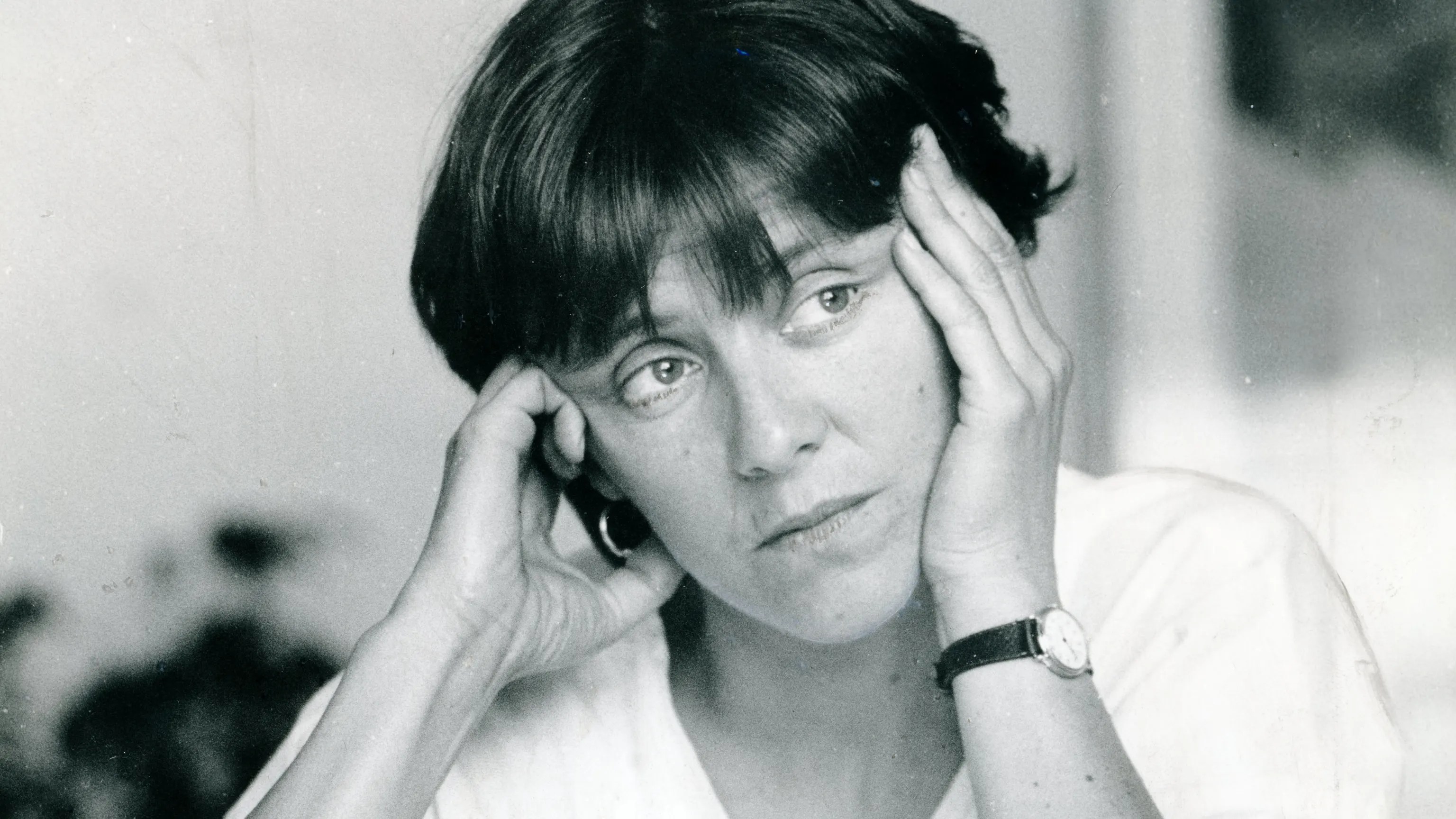
Notes: Portrait of Helen Garner from The New Daily

Sunday Morning

Church. My sister is one of the servers. Unaware that I’m there, she approaches the spot at the altar rail where I’m kneeling with my hands out. She stops in front me, carrying the big silver chalice, looks down, recognises me. She rocks back on her heels, her face is still with astonishment, then she smiles and I have to keep my eyes on her black shoes. My lips quiver against the rim of the chalice so hard that I’m afraid I won’t be able to swallow.

— Helen Garner, from a diary entry in 1987 when she was 44 in One Day I’ll Remember This: Diaries 1987–1995.


Notes: Portrait of Helen Garner in 1984 by Ray Kennedy via smh.com.au. ‘A poet in plain prose’: Reflection on Helen Garner’s amazing opus by Kerrie O’Brien.