For a complete list of the 53 films used: Writer’s Block – A supercut. (Thank you Steve)
Tag: Book
-
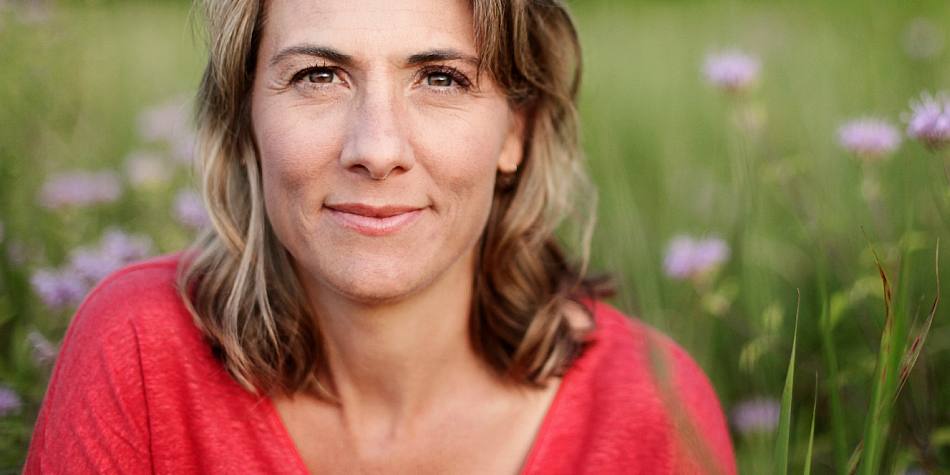
Now look again. Did you see something green? If you did, you saw one of the few things left in the world that people cannot make.

PEOPLE LOVE THE OCEAN. People are always asking me why I don’t study the ocean, because, after all, I live in Hawaii. I tell them that it’s because the ocean is a lonely, empty place. There is six hundred times more life on land than there is in the ocean, and this fact mostly comes down to plants. The average ocean plant is one cell that lives for about twenty days. The average land plant is a two-ton tree that lives for more than one hundred years. The mass ratio of plants to animals in the ocean is close to four, while the ratio on land is closer to a thousand. Plant numbers are staggering: there are eighty billion trees just within the protected forests of the western United States. The ratio of trees to people in America is well over two hundred. As a rule, people live among plants but they don’t really see them. Since I’ve discovered these numbers, I can see little else.
So humor me for a minute, and look out your window. What did you see? You probably saw things that people make. These include other people, cars, buildings, and sidewalks. After just a few years of design, engineering, mining, forging, digging, welding, bricklaying, window-framing, spackling, plumbing, wiring, and painting, people can make a hundred-story skyscraper capable of casting a thousand-foot shadow. It’s really impressive.
Now look again. Did you see something green? If you did, you saw one of the few things left in the world that people cannot make. What you saw was invented more than four hundred million years ago near the equator. Perhaps you were lucky enough to see a tree. That tree was designed about three hundred million years ago. The mining of the atmosphere, the cell-laying, the wax-spackling, plumbing, and pigmentation took a few months at most, giving rise to nothing more or less perfect than a leaf. There are about as many leaves on one tree as there are hairs on your head. It’s really impressive.
Lab Girl was selected as an Amazon Book of the Month for April, 2016. These are the opening lines from Hope Jahren‘s book which is described as “an illuminating debut memoir of a woman in science; a moving portrait of a longtime friendship; and a stunningly fresh look at plants that will forever change how you see the natural world.”
New York Times Book Review: ‘Lab Girl,’ Hope Jahren’s Road Map to the Secret Life of Plants
-

The Heart

It’s 4 a.m. Zeke’s asleep on my right, his front legs are stiff armed, fully extended and laying on my chest. No, on my Heart. But for his breathing, I could be laying in bed in the “world’s quietest room“, so completely quiet that I can hear my own organs pumping. The hypnotic page-turning ride continued:
“She paces the room. If this is a donation, it’s a pretty unusual one, she thinks. There is no donor in this operation— no one intended to make a donation— and likewise there is no donee, because she is not in a position to refuse the organ: she has to accept it if she wants to survive. So what is it exactly? The recycling of an organ that can still be used, can still fulfill its function as a pump? She begins to undress, sitting on the bed: she removes her boots, her socks. The meaning of this transfer, for which she was selected by an incredible alignment of coincidences— the almost perfect compatibility of her blood and her genetic code with those of someone who died today— all of this becomes hazy. She does not like this feeling of unearned privilege; this lottery, it’s like winning a little stuffed animal snagged by the metal claw from a jumble of toys piled behind glass in one of those arcade games. Worst of all is that she will never be able to say thank you; that is the crux of the matter. It’s simply impossible. Thank you— that radiant phrase— will fall into the void. She will never be able to express any kind of gratitude to the donor or the donor’s family, never mind offer a gift in return in order to free herself from this infinite debt, and the idea that she will be permanently trapped crosses her mind. The floor is ice-cold under her feet. She is afraid. Her whole being flinches…
She hopes that she will be able to kiss her sons before she puts on this tissue-paper gown that flutters without covering her up, making her feel as if she is naked in a breeze. Her eyes remain dry, but she is struggling to get her head around the enormity of what she is about to go through. Placing her hand there, between her breasts, she feels her pulse, still slightly too fast in spite of the medication, still somewhat unpredictable too, and says its name out loud: heart.”
~ Maylis de Kerangal, The Heart: A Novel
I’m done but it won’t be done with me – ever – an unforgettable story.
Notes:
- NY Times book review: ‘The Heart,’ by Maylis de Kerangal.
- Find the book on Amazon here: The Heart, A Novel.
- Photo: mennyfox55
- Related posts: Maylis de Kerangal
-
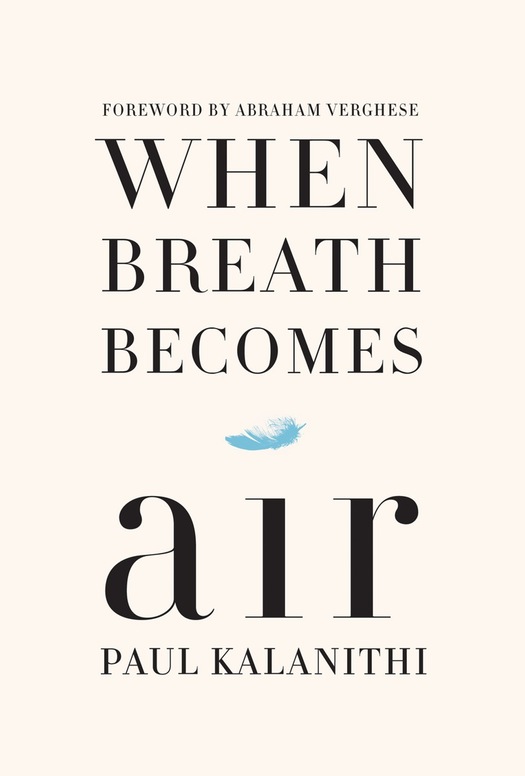
When Breath Becomes Air

In his foreword, Dr. Abraham Verghese closes with: “Be ready. Be seated. See what courage sounds like. See how brave it is to reveal yourself in this way… But above all, see what it is to still live, to profoundly influence the lives of others after you are gone, by your words. In a world of asynchronous communication, where we are so often buried in our screens, our gaze rooted to the rectangular objects buzzing in our hands, our attention consumed by ephemera, stop and experience this dialogue with my young departed colleague, now ageless and extant in memory. Listen to Paul. In the silences between his words, listen to what you have to say back. Therein lies his message. I got it. I hope you experience it, too. It is a gift. Let me not stand between you and Paul.”
And here’s Janet Maslin in her NY Times Book Review where she quotes Verghese and continues: “Dr. Verghese suggests not only reading “When Breath Becomes Air” but also listening to the overwhelming response it prompts in you. I guarantee that finishing this book and then forgetting about it is simply not an option.”
I completed Paul Kalanithi’s memoir this weekend and agree with Verghese and Maslin – waves of Kalanithi’s words are still lapping my shoreline. And they won’t let me go.
The book is a selection of Amazon’s Best Book of January 2016. “At the age of thirty-six, on the verge of completing a decade’s worth of training as a neurosurgeon, Paul Kalanithi was diagnosed with stage IV lung cancer. When Breath Becomes Air chronicles Kalanithi’s transformation from a naïve medical student “possessed,” as he wrote, “by the question of what, given that all organisms die, makes a virtuous and meaningful life” into a neurosurgeon at Stanford working in the brain, the most critical place for human identity, and finally into a patient and new father confronting his own mortality. Kalanithi died in March 2015, while working on this book.”
Here’s an excerpt:
“The morning commuters began to animate the distant South Lake Tahoe roads. But craning your head back, you could see the day’s blue darken halfway across the sky, and to the west, the night remained yet unconquered— pitch-black, stars in full glimmer, the full moon still pinned in the sky. To the east, the full light of day beamed toward you; to the west, night reigned with no hint of surrender. No philosopher can explain the sublime better than this, standing between day and night. It was as if this were the moment God said, “Let there be light!” You could not help but feel your specklike existence against the immensity of the mountain, the earth, the universe, and yet still feel your own two feet on the talus, reaffirming your presence amid the grandeur.”
And another: (more…)
-
There is nothing, and there is not one bloody thing.

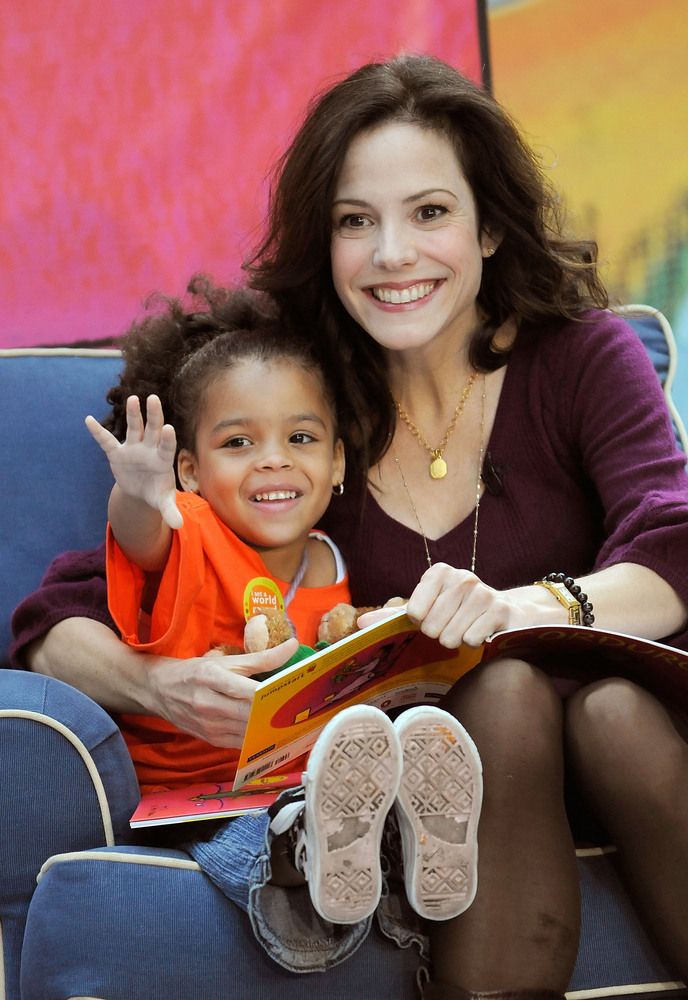
In September, 2007, Mary-Louise Parker adopted a child from an orphanage in Ethiopia. The child’s Uncle walked a distance that Parker stated she would complain if she had to travel to in a car. The journey was made with his children, three of which were under 10. The baby was carried on his hip. This excerpt is from a letter written by Parker (“Dear Uncle“) as a tribute to him. In their first meeting, he said: “I hope that she will be taken care of, go to school and perhaps one day be something, a doctor.”
There are so many reductive adjectives used to describe those materially less fortunate, words the privileged use to anoint them. Words like proud, or graceful…It never rings true. Having seen what I saw when you brought me to the hut where my daughter was born, and introduced me to the people in your village, I felt like I was hovering over every judgment of my reality and yours, unable to land. None of the families I met were intact, everyone had lost children, parents, or a spouse. There was not enough of anything for anyone. The only bounty was in categories of suffering or possible ways to die. I didn’t feel them looking at me with distance, they all smiled and shook my hand.
I hid my embarrassment at how stupid I felt when I entered your hut and was alarmed by the darkness that swallowed me despite it being late morning. Of course I knew there was no electricity, no light would be there except for what might creep in through that ceiling of straw. I knew it, but I couldn’t fathom it until I stood inside with you and stared at an actual nothingness and my eyes adjusted to near black. There is nothing, and there is not one bloody thing. As you pointed at different parts of the hut that were designated for the cows to sleep, or the spot where your family of twelve eats when there is food, or where you slept, I saw spots with absolutely nothing in them. There was an absence of comment on your situation that made you seem twenty feet tall. It’s something I could never know if I hadn’t stood there, with you showing me what life is like on another planet where there is no complaining, or showing disappointment. (more…)