
~ Robert Creeley, Pieces in The Collected Poems of Robert Creeley, 1945-1975, Volume 1
Source: invisiblestories.

~ Robert Creeley, Pieces in The Collected Poems of Robert Creeley, 1945-1975, Volume 1
Source: invisiblestories.
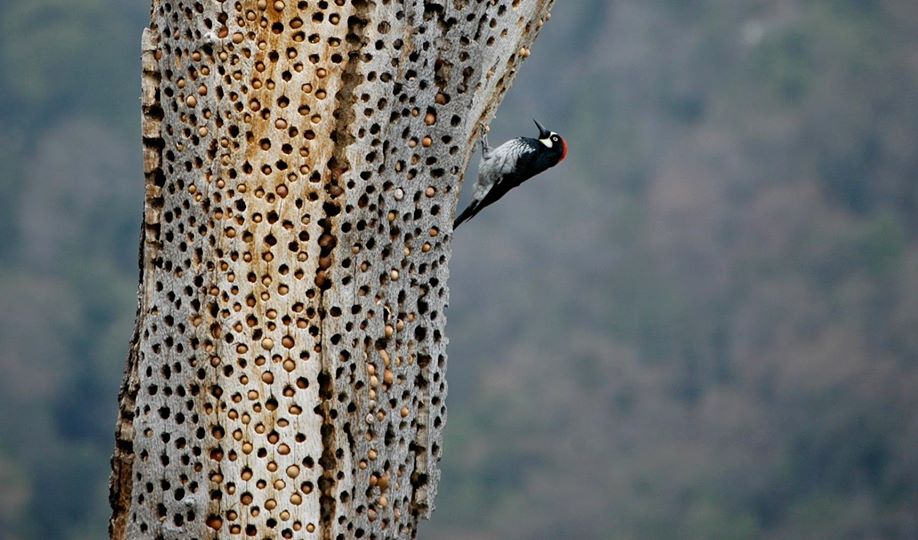

A very small woodpecker is beating his brains out against a piece of metal on the telephone pole across the street. Bangbangbangbangbang. I stand underneath. “There are no bugs in there,” I call up to him, “you’re going to blunt your beak,” but he keeps hammering away. We have a lot of woodpeckers. Great big ones, and the noise they make is very loud. Maybe this poor baby thinks he’s doing it right. There’s a lesson in this somewhere, and I hope I’ve already learned it.
~ Abigail Thomas, What Comes Next and How to Like It: A Memoir
Notes:


You’ve seen the way in which a woman chooses a dress from her closet, then stands before a mirror, holding it at arm’s length, clutching its shoulders as if it were a son she is sending to war, looking him up and down and then drawing him close and pressing him against her breast. And then she sees herself embracing him, and smiles, the two of them looking so perfect together, full of such hope, facing the future.
~ Ted Kooser, The Wheeling Year: A Poet’s Field Book
Photograph: Drowned in Daydreams


I am a prophet of the past.
And how do you see and foresee the future?
As when a man sees a woman with a beautiful body
walking before him in the street
and looks at her with desire,
but she doesn’t turn to look back,
just smooths her skirt a little,
pulls her blouse tight,
fixes the back of her hair,
then without turning toward the man’s gaze
quickens her step.
That’s what the future is like.
— Yehuda Amichai, section 5 of “I Foretell the Days of Yore,” Open Closed Open
Notes:
avenoir – n. the desire that memory could flow backward
We take it for granted that life moves forward. But you move as a rower moves, facing backwards—you can see where you’ve been, but not where you’re going. And your boat is steered by a younger version of you. It’s hard not to wonder what life would be like facing the other way…
Source: John Koenig: The Dictionary of Obscure Sorrows